
Why Innovation Can’t Happen Without Playfulness
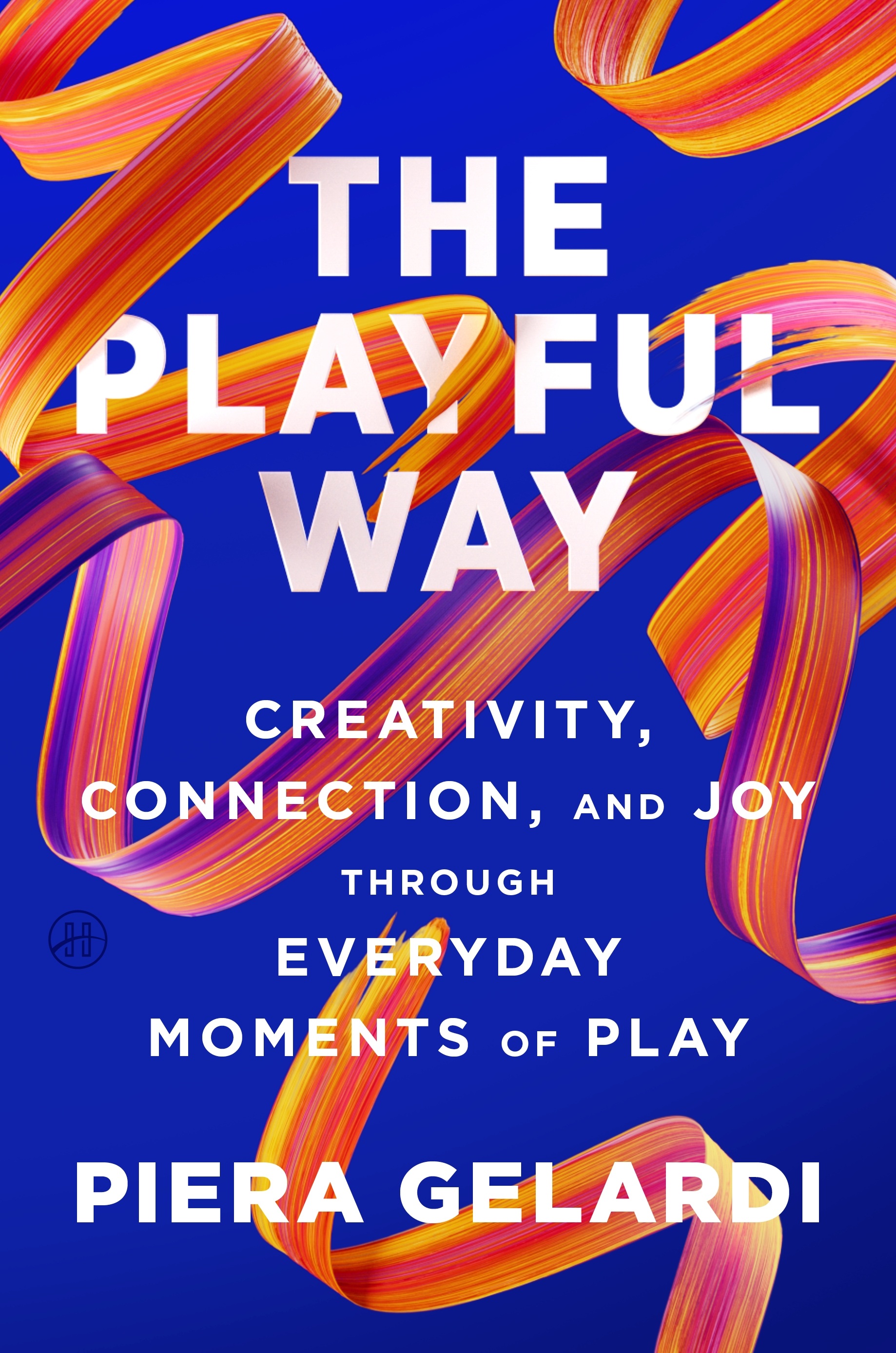
Innovation can’t exist in a culture that doesn’t allow for playfulness, says Piera Gelardi, author of the new book The Playful Way. Yet the environment in many workplaces today is shaped by plenty of non-playful dynamics. So what do you do?
Innovation can’t exist in a culture that doesn’t allow for playfulness, says Piera Gelardi, author of the new book The Playful Way.
Yet the environment in many workplaces today is shaped by plenty of non-playful dynamics, like layoffs, budget cuts, and the expectation that everyone is weaving AI into the way that they work.
“Even in my own experimentation with using AI, a lot of the time it sucks the joy out of the process,” says Gelardi. “We need our creative brain to actually tell us what’s good. But we’re pushed into more and more efficiency, and we’re…losing the intrinsic motivation that comes from solving our own problems, from going through a creative process.”
She says that playfulness at work is not about cracking more jokes or planning awkward team-building exercises. Instead, she writes in The Playful Way, playfulness can be:
- “Finding humor and lightness even in tense moments
- Staying open to possibilities rather than fixating on
one ‘right’ way - Experimenting rather than seeking perfection
- Bringing an ethos of curious exploration to difficulties
- Finding wisdom in the body when the mind’s tied up
in knots - Tuning your attention to notice details and find wonder
- Reimagining dull tasks through reframes and games
- Improvising when things go sideways.”
Gelardi was founder of the media site Refinery29 and NoomaLooma, a startup focused on digital tools and real-world experiences that support creativity. Here are five insights and pieces of advice from our recent conversation.
• • •
1. Overreliance on AI Can Erode Learning and Joy
Efficiency culture — especially when amplified by AI — can drain the meaning and motivation from work.
Gelardi is not anti-AI, or anti-productivity, but she warns that organizations are increasingly outsourcing the satisfying “messy middle” of creative problem-solving to AI platforms. She says people build confidence and intrinsic motivation by wrestling with challenges themselves, and overreliance on tech can erode both learning and joy. One observation: “When people are outsourcing those little micro moments of creativity, you just start to become less and less alive.”
2. Playfulness is Foundational to Innovation
Playfulness isn’t a frivolous “nice to have”; it’s foundational to innovation and resilience. Gelardi argues that workplaces have wrongly trained people to see play as silly or unproductive, when in reality it fuels creativity, collaboration, stress relief, and problem-solving. She suggests that organizations obsessed with efficiency and outcomes often strip away the very conditions that make innovation possible. As she puts it: “There’s no innovation without play.”
3. Play Deprivation is Real
Gelardi suggests that burnout may actually be a form of “play deprivation… being overworked and underplayed.” She reframes workplace burnout not simply as overwork, but as a lack of curiosity and experimentation. Playful people, she says, approach challenges with openness and exploration, while stressed people become rigid and “adversarial against whatever challenge is coming [their] way.” Stress can cause people to fight new ideas.
3. Don’t ‘Silo the Play’

Playfulness works best when woven into everyday work — not limited to the annual off-site gathering or an icebreakers at the start of a meeting. One of Gelardi’s key points is that companies often “silo the play,” bringing in an improv coach once or twice a year, or running the marshmallow challenge at orientation, while the daily culture remains pretty joyless. Instead, she argues that playfulness is a muscle built through small repeated behaviors: asking more questions, moving physically during brainstorming, using whiteboards or Post-its, taking walking meetings, or starting brainstorming sessions with quick warm-up exercises. She says that psychological safety and play reinforce each other over time.
5. Leaders Can Model Playful Behavior
Leaders and employees alike can create little moments of whimsy that reduce pressure and improve collaboration. Gelardi encourages leaders to model playful behavior openly, but she also says that anyone can introduce small sparks of novelty into the culture. Her examples are intentionally modest: renaming a “quarterly budget review” a “budget bonanza,” creating music playlists for routine meetings, or inventing rituals that make routine work feel lighter.
Her underlying philosophy is easy to remember: “Pressure tightens and play lightens.”