
Here are the Winners (and Finalists) of InnoLead’s 2026 Impact Awards
From supersonic aircraft to heavy trucks to robotic surgical assistants, this year’s Impact Awards focus on companies that are moving their industries forward. Here are the 15 finalists…
From the playing fields of this summer’s FIFA World Cup to the Minnesota Vikings’ chilly home stadium to the aisles of your local Lowe’s, you’ll find the finalists for this year’s Impact Awards introducing new ideas in some surprising places. (Including restrooms and auto body shops.)
Launched in 2018, the Impact Awards celebrate the people and teams inside big organizations delivering tangible value — and disrupting the status quo — with innovation.
Some companies nominated their own initiatives, while others were submitted to the process by InnoLead partners or our editorial team. All were evaluated on the merits of the entry in an unbiased process.
For 2026, we selected 16 finalists and nine winners. You’ll meet many of them at next month’s Impact 2026 event in Cambridge, Mass.
Our 16 finalists and winners are listed below. Congrats to everyone who submitted, our finalists, and our winners — and everyone who supported these initiatives!
Adidas
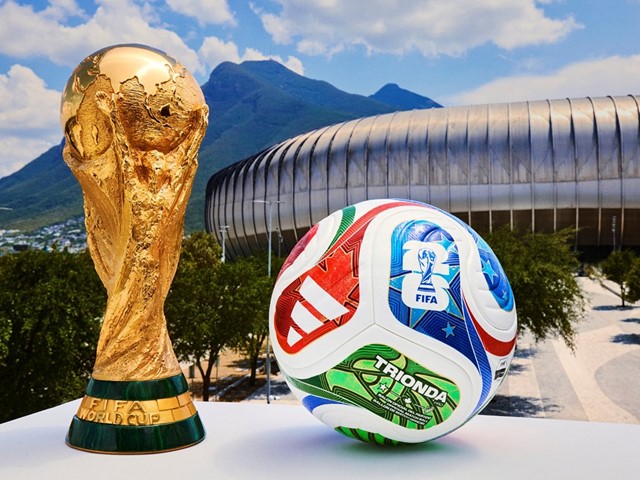
Adidas’ official “Trionda” ball, slated to be used in this summer’s World Cup games, may be the most advanced soccer ball ever made. A chip mounted on the side of the ball can send data to an official match’s Video Assistant Referee (VAR) system in real-time. When that data is combined with data about player positions, the ball can help match officials make faster offside decisions, and also identify illegal contact with a player’s hands. The ball was developed in collaboration with Kinexon Sports of Munich.
AkzoNobel — Winner
Auto bodyshops face increasing pressure to reduce repair cycle times, control costs, and meet stricter environmental standards, all while maintaining flawless finish quality. Conventional basecoat painting systems require multiple application steps, extended spray booth time, and high energy consumption, limiting throughput and profitability.
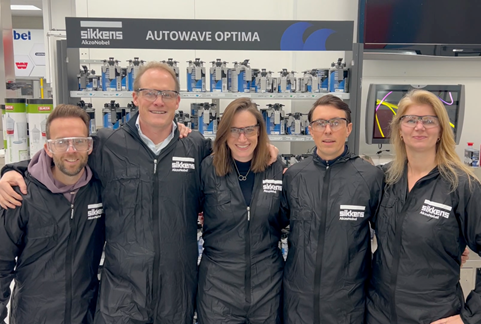
AkzoNobel, a Dutch paints and coatings company, launched Autowave Optima to improve refinishing performance. The initiative delivers a fully integrated, high-productivity system combining coatings, digital tools, and process changes that reduce repair time, cost, and variability for bodyshops. Among the benefits: up to 50 percent reduction in process time, up to 60 percent reduction in energy consumption and CO₂e emissions, and up to 15 percent reduction in material usage. In a typical bodyshop with two paint booths, Autowave Optima helps enable 37 additional repairs per year, driving incremental revenue.
Supporting firm: HYPE Innovation
Anthropic — Winner
Claude Cowork launched in January 2026 as a research preview, and became more widely available in April. It’s an agentic AI system that can take a goal, work across your local files and apps, and return finished deliverables like documents, spreadsheets, and slides. Cowork is especially well-suited for multi-step, repetitive knowledge work. In its review, Hackceleration called Claude Cowork “one of the most intuitive AI assistants we’ve encountered for actual work automation versus just conversation.”
Apple — Winner
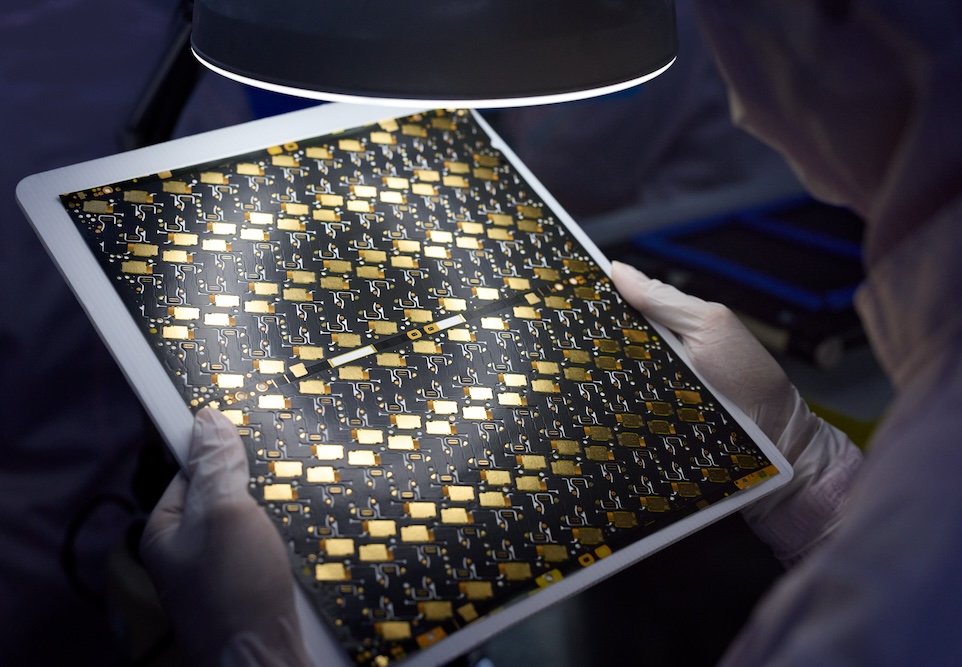
Apple’s initiative to include more recycled content in its products is hitting new milestones: in 2026, the company says it is using 100 percent recycled cobalt in all the batteries it designs, and 100 percent recycled rare earth elements in all magnets. Last year, 30 percent of material across all of its products shipped was sourced from recycling. Oh, and the printed circuit boards inside Apple products are made with 100 percent recycled gold plating and tin soldering.
Google.org launched its Generative AI Accelerator in 2024 to support nonprofit organizations in leveraging GenAI as part of their work. More than 40 organizations have participated, getting access to funding, technical training, Google Cloud credits, and support from the company’s AI experts.
GP PRO, a Division of Georgia-Pacific — Winner
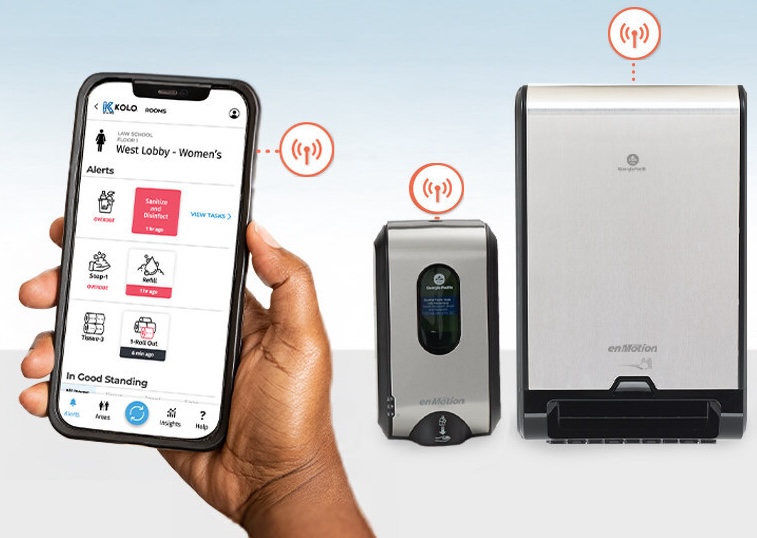
The seventh-inning stretch in baseball, or halftime in football, are crunch time for stadium restrooms. GP PRO, which makes dispensing technologies for products like soap, paper towels, and toilet paper, developed the IoT-enabled KOLO Smart Monitoring System for exactly those kinds of environments. Alerts delivered by the dispensers to mobile devices carried by cleaning staff provide usage data and maintenance updates to help reduce product outages and waste while optimizing labor allocation. As a result, 99.5 percent of GP PRO dispensers equipped with the KOLO Smart Monitoring System are fully stocked. Unnecessary dispenser checks are reduced by 95 percent, while cost savings and environmental responsibility are elevated by near-zero waste. The system is already used in venues like Oracle Park in San Francisco and Progressive Field in Cleveland, and Version 2.0 rolled out in November 2025.
James Hardie — Winner
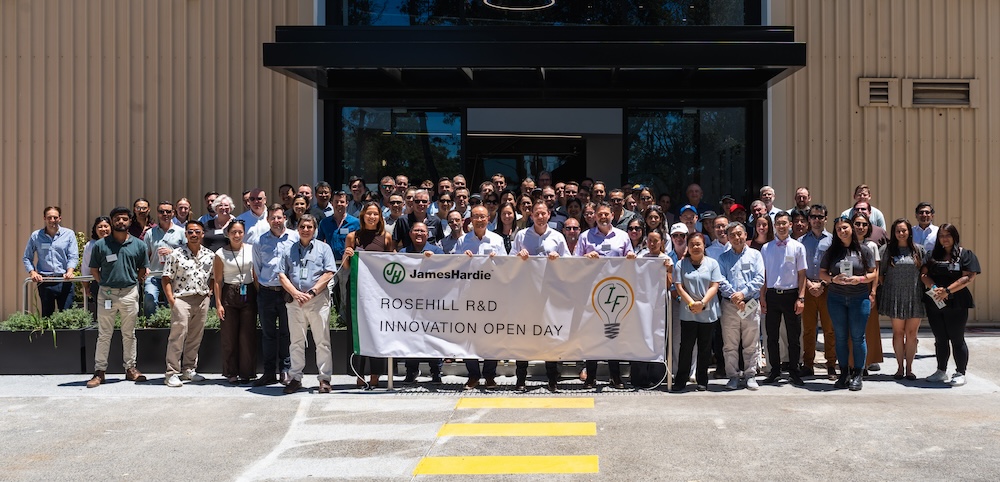
The building materials manufacturer James Hardie established an Innovation Forum Committee (IFC) in 2022, and formalized it in 2023. The IFC is a grassroots, R&D-led initiative designed to accelerate innovation by enabling employees to generate, test, and scale ideas that deliver measurable business impact. Over time, it has evolved into a global operating model that connects R&D teams across North America, Europe, and Australia/New Zealand, while embedding AI and digital innovation directly into day-to-day work. A flagship program within IFC is T.H.I.N.K. (Time for Hardie to Innovate New Keen Ideas), which allows R&D employees to dedicate up to 10 percent of their time to developing new concepts outside traditional project structures. These ideas are pitched during Innovation Forum Day events, where business leaders evaluate, sponsor, and advance the most promising concepts.
This approach has led to the development and deployment of AI-driven solutions with significant operational and financial impact, such as Hardie Hotline. That is an internally developed AI installation assistant that provides real-time, product-specific guidance to installers. Early performance indicators show a roughly 76 percent reduction in installation-related callbacks, and estimated $5-$7 million in annual cost avoidance. The JH Lab Assistant developed AI-guided lab workflows that have led to up to 50 percent faster execution, 30 percent faster onboarding, and approximately $4,000 in productivity gain per user annually
Supporting firm: HYPE Innovation
LEGO
Launched in January 2026 in the US, UK, France, Germany, Poland, and Australia, the LEGO SMART Play system involves new SMART Bricks, SMART Tags, and SMART Minifigures to trigger lights, sounds, and other interactive responses that are tied to their context and how a child is playing with them.
Lowe’s — Winner
Mylow Companion is among the first AI-powered assistants built for home improvement retail. It was created to give every Lowe’s associate instant access to product knowledge, project guidance, and customer support tools directly on the sales floor. The assistant was designed for one of the most complex environments in retail, where customers are not just buying products, but engaging in multi-step projects that require detailed planning. Mylow Companion helps scale home improvement expertise across a Lowe’s store, reducing traditional barriers to service such as specialized trade knowledge, department expertise, and language gaps. It can speak Spanish or English, and accept input via voice or text. In just the first year of deployment, the app saw more than five million engagements in Lowe’s stores. Lowe’s also saw an improvement in “likelihood to recommend” surveys among its consumers, which it said was directly tied to an improved customer experience.
Supporting firms: OpenAI
Medtronic — Winner
Deep brain stimulation has been used to treat Parkinson’s disease for several decades now. But a new system from Medtronic, BrainSense Adaptive DBS, personalizes treatment based on a patient’s brain activity in real time. It won approval from the US Food & Drug Administration in 2025. And in a trial with 85 patients using Medtronic’s new adaptive algorithm to control their implanted neurostimulator, participants reported on average more “on time” (time with good motor control), and less “off time.” Ninety-eight percent of the study participants chose to continue using the adaptive brain stimulation instead of returning to their prior settings.
Minnesota Vikings
The Winter Whiteout Innovation Campaign reimagined an annual NFL tradition — the Minnesota Vikings game where the team, the fans, and the stadium are all decked out in white — as a scalable cultural platform designed to drive Gen Z affinity, expand national and global reach, and modernize how the organization executes high‑visibility moments. Rather than treating innovation as a single creative execution, the team applied a structured innovation cycle spanning problem framing, crowdsourced ideation, portfolio decisioning, execution, and learning, with the Vikings x ATEEZ collaboration serving as a flagship proof point of that system at work. (ATEEZ is a well-known Korean pop band.) The campaign with ATEEZ alone delivered over 2.5 million impressions from a single video and supported 3,500 new Gen Z fan records added in December, alongside 72 percent in‑stadium wear‑white participation, the highest level to date. (Oh, and the Vikings also beat their rivals, the Detroit Lions, in the most recent Whiteout game.)
Supporting firms: Netflix, NFL, Sony Music Entertainment Korea
NVIDIA
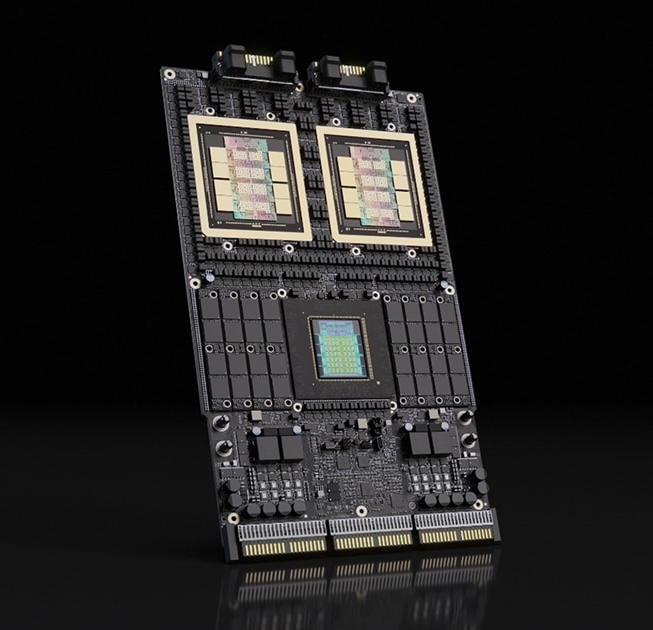
Designed specifically for the era of agentic AI, NVIDIA’s new Rubin supercomputing platform delivers lower cost, more reliability, and better power efficiency than the company’s previous platforms. xAI chief executive Elon Musk said that Rubin — named for a pioneering American astronomer, Vera Rubin — “will remind the world that NVIDIA is the gold standard,” and NVIDIA CEO Jensen Huang predicted $1 trillion worth of orders for Rubin, along with older NVIDIA chips, by the end of 2027.
Tampa International Airport
Overheight vehicle strikes are a persistent — and largely preventable — problem at airports like Tampa International in Florida. Even a single incident can cascade into a major operational disruption. Despite known vehicle heights and fixed bridge or garage clearances, detection has historically been passive, relying on driver awareness, static signage, or post-incident response. And commonly-used navigation apps can unintentionally route overheight vehicles into restricted lanes.

Tampa International deployed the Overwatch platform from Sotereon.AI, which combines LiDAR sensors, AI, and real-time telemetry to move toward active prevention of these incidents. The LiDAR sensors can detect overheight vehicles, send a message to digital signs, and notify policy. The outcome at Tampa International has been a reduction in damage-causing events, and improved real-time operational visibility.
Supporting firm: Sotereon.AI
Toronto Transit Commission — Winner
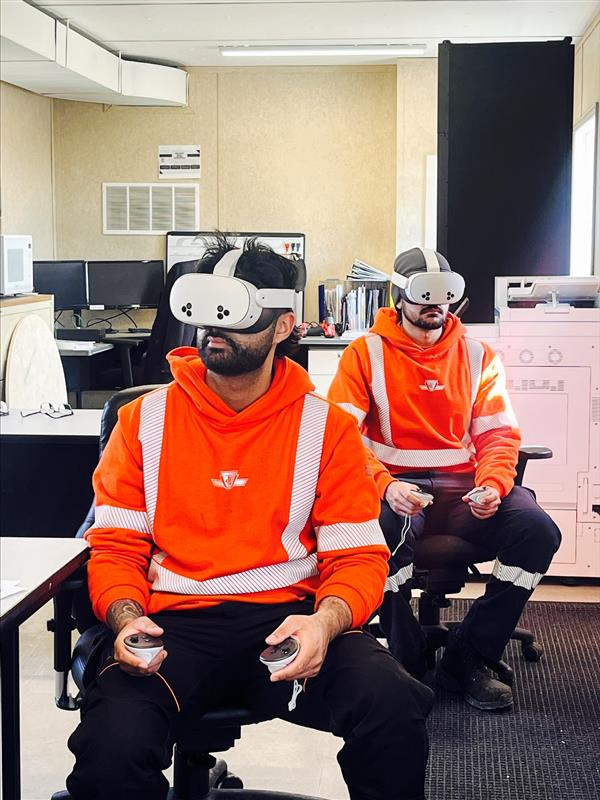
Research indicates up to 70 percent of training content is forgotten within 24 hours without reinforcement. In 2025, the Toronto Transit Commission, a Canadian public transit agency, introduced an immersive VR training program to supplement existing classroom and field training, reinforcing learning through realistic, hands-on simulation, focusing on high-risk scenarios that are difficult to train employees on in the real world. Some of the early outcomes: 50 percent reduction in classroom training time while maintaining training quality, approximately 2,000 training hours saved during pilot, and up to $600,000 Canadian dollars in projected annual savings. And 90 percent of the employees trained with the VR technology reported improved understanding and visualization of real-world tasks.
Supporting firms: Disruptive Edge
USAA
The first member-facing GenAI tool deployed by the major financial services firm, USAA’s Résumé Builder helps military members transitioning into the civilian workforce create their first resume in less than two minutes. It can translate the user’s military experience into relevant corporate experience, tailored to desired target roles and industries. Multiple pilot tests have shown the tool’s output to be extremely strong in positioning candidates for open jobs.
Walmart
Inventory management at the world’s biggest retailer now relies heavily on AI to analyze real-time sales, weather, local demand, transportation delays, and online shopping behavior to predict what products each store will need and when. The system helps Walmart reposition inventory dynamically — for example, shifting sweaters to colder regions or pool toys to warmer states — while also optimizing warehouse operations and truck routing. Walmart says the technology improves forecasting accuracy, reduces out-of-stocks and excess inventory, and accelerates replenishment across its 4,600 U.S. stores.
W.L. Gore — Winner
GORE-TEX AccessWear is a membership service that gives outdoor enthusiasts flexible, affordable access to a rotating closet of premium GORE-TEX jackets across multiple brands, designed to drive a system-level shift from ownership to usership while creating new revenue and sustainability outcomes for Gore and its partners. The initiative promotes circularity by promoting garment rental and resale. The AccessWear team ran a North American pilot with 100+ paying customers that demonstrated clear willingness to pay, and engaged 10 brand partners. The team is currently scaling to a 1,000-user minimum viable product test, with a fully operational backend to validate unit economics and ecosystem value over a year. With AccessWear, W.L. Gore is proving that circular models can deliver real business value.
Supporting firm: Disruptive Edge

• • •
Winners will be honored at the Impact 2026 conference, which takes place June 8-10 in Cambridge, Mass.